
Read the roof as a series of water routes
A valley is the channel where adjoining roof slopes direct water together. A flashing is a formed detail that manages water at a junction, such as a wall, chimney, penetration or change in roof shape. They perform different jobs, but both depend on how water arrives, passes through and leaves the area. Looking at the visible defect alone can miss a restriction or faulty junction further uphill.
From the ground, identify the broad shape of your roof. Is there one simple ridge, several intersecting wings or an extension attached below the original eaves? Sketch the intersections you can see without climbing. Label the street and the affected room if there is an internal leak. You do not need to know trade terminology to give an assessor useful information about the roof layout.
A Pakenham home with an added veranda may have a different water route from the neighbouring house that originally looked identical. A garage roof may discharge near a valley outlet, or an upper storey may feed a lower roof. Ask the inspection to consider the whole connected route. A local repair makes sense only when it leaves water a clear and appropriate way to continue down the roof.
Distinguish a blocked channel from a failed channel
Leaves, broken material and accumulated debris can restrict a valley without proving that the valley itself has failed. Conversely, removing visible debris does not prove the underlying metal is sound. Ask for photographs before and after cleaning where cleaning forms part of the investigation. This separates the initial obstruction from the condition that becomes visible underneath.
The assessor should look for the extent of deterioration, the channel shape, the adjacent roof edges and how the outlet meets the gutter or lower roof. A close photograph of surface staining is not enough to establish that a whole valley needs replacement. Ask what distinguishes a cosmetic mark from deterioration that affects the proposed repair. The answer should relate to that particular component.
Avoid specifying a narrow strip of coating over an unknown defect as the starting point. A surface treatment cannot be assumed to restore missing or unsuitable material. If the quote proposes replacement, ask whether the work includes lifting and reinstating adjacent tiles, any necessary support work and removal of debris from the outlet. A channel-only price can leave important surrounding tasks undefined until the roof is open.
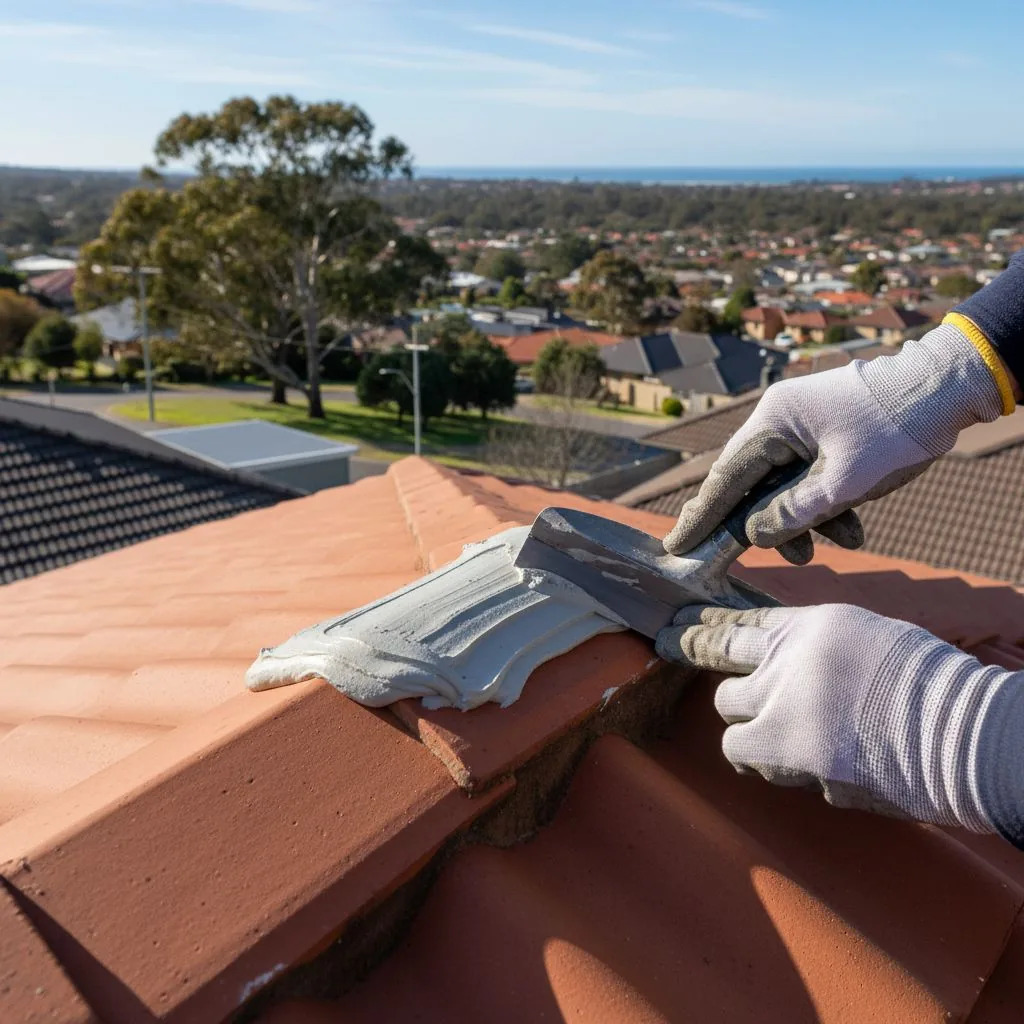
Understand why flashing repairs need both sides checked
A flashing connects surfaces that may behave differently. At a wall junction, the visible lower edge is only part of the detail. The upper termination and the way water is prevented from passing behind it can be equally important. At a pipe or other penetration, the surrounding roof profile and the connection to the penetration both need consideration. A neat bead on the exposed edge is not a complete description.
Ask the assessor to identify what type of junction is present and which part has failed. Has material deteriorated, has a joint opened, or does the shape direct water into the wrong place? Those questions lead to different scopes. Replacing a damaged component may be enough in one case; repeating the original arrangement may reproduce the problem in another.
The replacement materials must suit the existing roof and their contact with adjoining materials. BlueScope provides selection guidance covering flashings, gutters and fasteners for its steel products. Ask the contractor to identify the proposed material and compatibility basis for your roof. A homeowner need not choose a metal combination from a photograph, but the written scope should make clear that the choice has been considered.
Decide how much of the surrounding roof belongs in the scope
A valley repair may require access beneath neighbouring tiles or sheets. That does not automatically mean the entire roof needs restoration. Ask which adjoining components must be disturbed, which can be reused and which may need replacement once exposed. The scope should distinguish necessary access from optional appearance work, so you can compare proposals without confusing different amounts of work.
On a tiled roof, identifying replacement tiles before lifting begins can prevent a delay if brittle or already damaged pieces cannot be reused. Ask how any newly discovered damage will be documented. A photograph, location and written variation are more useful than a verbal statement that extra work became necessary. Establish the decision process while the roof is still intact.
Access can also affect the practical sequence. A valley beneath solar panels, near a high wall or above a narrow side passage may need additional coordination. The roof contractor should explain what can be assessed from the available access and what remains uncertain. Do not accept an unexplained all-inclusive scope that depends on seeing concealed conditions later, or an open-ended promise to sort out every surprise without an agreed process.
| Scope | What it can address | Question to resolve |
|---|---|---|
| Debris removal | Restricted flow where the channel remains sound | What condition is exposed after cleaning? |
| Local junction repair | A defined defect with suitable adjoining material | How will the repair join to sound material? |
| Valley replacement | A channel that cannot be repaired reliably | Are tile lifting, supports and outlet details included? |
| Flashing redesign | A junction whose geometry causes repeat problems | How will water flow after the detail changes? |
Hypothetical example: a leak beside a garage extension
Consider a house where the garage was extended and a damp patch now appears near the connection to the original roof. A homeowner might ask for a new valley because the mark lies near one. A better request is to inspect the original roof, extension junction and downstream outlet together, then explain which part of the route is failing.
Suppose the inspection finds debris at the outlet and a poorly understood transition beneath an adjoining roof edge. Cleaning may allow a clearer assessment, but it does not establish that the hidden transition is correct. The contractor can first document what is visible, then propose the access needed to inspect the remaining junction. This gives the homeowner a reason for the staged approach.
If a replacement detail is recommended, the quote should describe how it connects to both roofs and where the water will discharge. Completion photographs should show more than a shiny new strip of metal. They should help explain the repaired inlet, junction and outlet. A successful-looking surface is useful evidence of appearance; the homeowner still needs evidence that the repair addresses the original drainage problem.
Common shortcuts and the questions that correct them
A repeated patch can become harder to assess when every visit adds another product over the previous one. Ask whether existing patch material needs removal to inspect the substrate and establish a suitable connection. If the repair relies on material left beneath the patch, the contractor should explain why that material can support the proposed work.
Another mistake is filling a gap without checking whether it is part of a drainage or movement detail. Homeowners should not prescribe that every opening be sealed. Ask what the opening does, whether it is defective and how the proposed treatment preserves the intended function. The aim is controlled water movement, not simply a roof with no visible gaps anywhere.
A third shortcut is quoting all valleys by length without describing their condition. Length can help quantify work, but it cannot explain the need for it. Request a roof sketch that identifies each valley and differentiates those requiring maintenance, repair or replacement. That makes it possible to stage work intelligently if some areas are sound and others need attention sooner.
Finally, avoid treating a dry-weather inspection as a complete leak test. Ask whether a controlled test is appropriate and what it would establish. If a test is not useful or cannot be done safely, the report should say how performance will be checked instead.
Compare repair proposals without relying on the headline
Put competing scopes beside each other and compare the same junctions. Does one proposal include adjoining tile work while the other excludes it? Does one describe material removal and preparation while the other only lists a finished coating? Does either account for access, waste handling and the condition of the outlet? These differences can explain why two quotes cover very different jobs.
Ask each contractor to separate known work from provisional work. Known work is supported by the inspection; provisional work depends on what becomes visible after access is opened. A useful scope states the trigger for a variation and how the homeowner will be informed. It should not make you guess whether the initial figure covers every adjacent roof component.
For a home in Heritage Springs, Cardinia Lakes or elsewhere in the area, avoid accepting the estate name as a diagnosis. Roof shape, alterations and maintenance history differ within the same street. Provide photographs of your own house and any relevant earlier invoices. The most useful quote is the one that connects an observed defect to a defined repair and a practical check, regardless of how familiar the contractor says the suburb is.
Check completion at the junction and downstream
Ask for photographs of the area before reinstatement hides important parts of the work. The purpose is not to supervise someone on the roof; it is to retain evidence of the detail you cannot safely inspect yourself. Request location labels so you can connect the images to the quote and the original leak report.
The handover should explain whether debris was removed from the valley outlet, gutter and connected drainage affected by the work. If an internal mark was part of the original complaint, record whether it was checked and whether further drying or assessment is needed. A completed external repair does not automatically settle the condition of internal materials.
Keep the repair scope and photographs together. If a problem returns during different weather, provide the earlier evidence rather than asking for another unexplained patch. The brief builder below turns your concern, observations and access limitations into a starting scope for an assessment. Use it to ask which junction failed, why the selected repair suits it and what evidence will show that the water route is functioning again.